













































Trusted globally
Used by global companies managing ESG due diligence
From first risk screening to ongoing supplier engagement, teams rely on Worldfavor to structure their CSRD due diligence process.
Your approach
A scalable approach to CSRD data collection and reporting
Move from fragmented ESG data to a scalable, audit-ready reporting foundation built on ready-to-use frameworks and proven sustainability expertise

Compliance workflows
Operationalize CSRD requirements through reporting workflows
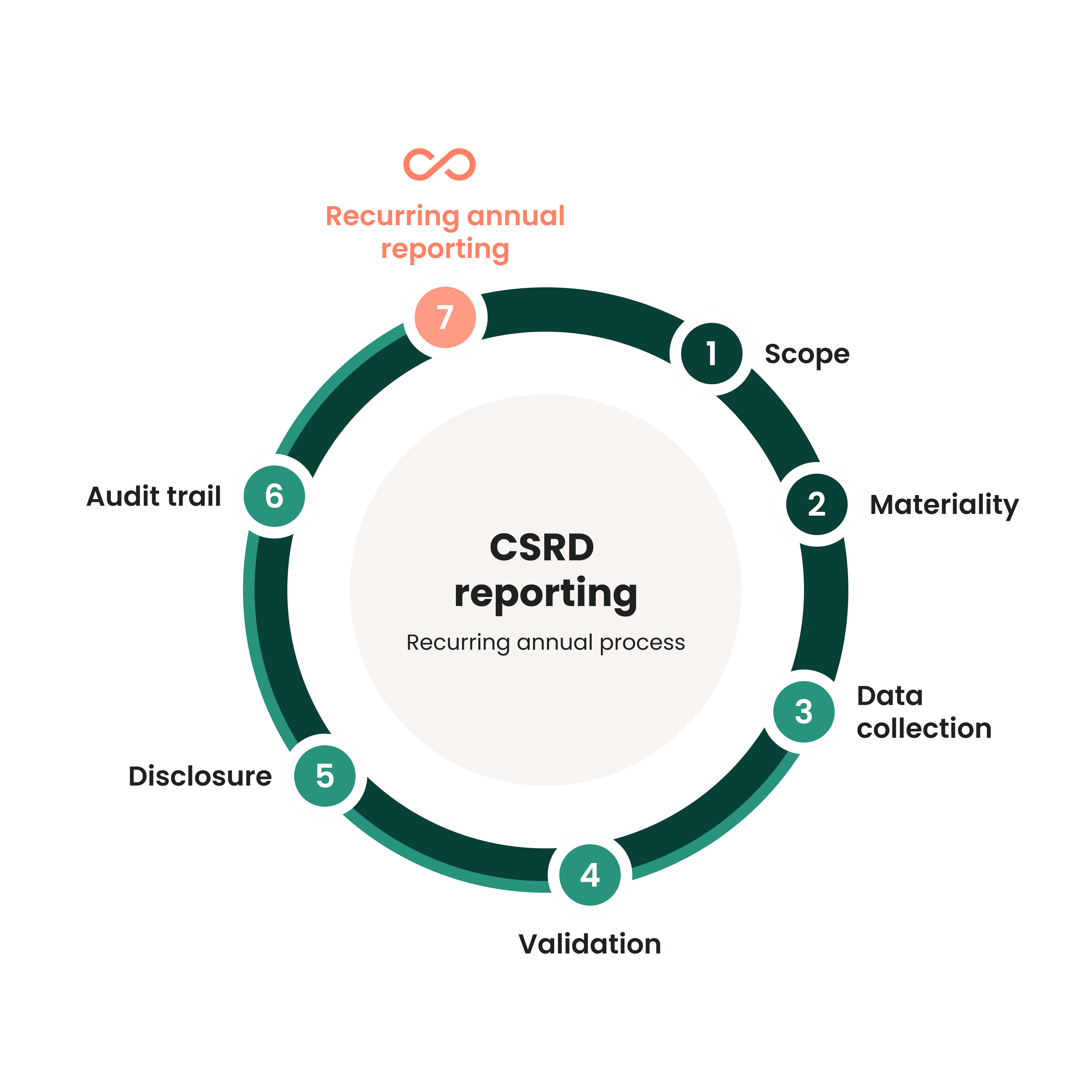
From data collection to disclosure, structure your CSRD workflows to manage complexity, ensure consistency and maintain control across reporting cycles.
Define
Define your reporting scope across entities and topics
Collect
Collect ESRS-aligned ESG data across your organization
Validate
Validate and align data across reporting dimensions
Report
Prepare clear and audit-ready ESG disclosures
CSRD data collection in one place
What your team gets when Worldfavor runs your CSRD process
Getting ESRS-aligned data from suppliers and value chain partners is the step that slows CSRD reporting down. Worldfavor gives your team a clear collection foundation that repeats every reporting cycle.
Your material topics prioritized and your scope defined
A ready-to-use ESRS framework scoped to your material topics. Your team knows what to collect and from whom.
Collection requests sent, clarifications handled in one place
Send collection requests and follow up with suppliers directly in one place. Your reporting relationship improves year after year.
Your audit-ready data foundation, transparent and ready to disclose
Every response is timestamped and traceable. Your team has a data set that holds up to CSRD audit requirements.

text
"We see Worldfavor as a vital accessible tool that enables us to perform in line with new regulations while continuing to uphold our sustainability goals"

Frida Engström
CEO Indiska


Regulatory requirements
CSRD requirements made clear
CSRD sets obligations for companies to disclose structured and auditable ESG information across their operations and value chain, aligned with ESRS standards.
Which companies are affected by CSRD
What CSRD requires companies to do
What this means in practice
To comply with CSRD, companies need to:
Define and assess material ESG topics across their organization
Collect ESG data across entities and reporting scopes
Prioritize reporting efforts based on double materiality
Maintain a structured and auditable reporting process

The system
A system designed for structured ESG reporting at scale
Worldfavor centralizes ESG data, workflows and reporting so you can manage CSRD requirements in one system.
Centralized ESG data
Keep ESG data, reporting inputs and disclosures in one place
Reporting workflows
Follow a structured reporting process without building it yourself
Expert-driven frameworks
Use continuously updated ESG content aligned with CSRD and ESRS
AI-supported data structuring
Organize ESG data and identify gaps with minimal manual work
Enterprise readiness
Run compliance you can audit and repeat each cycle
Expert-maintained content, API integrations, and documented controls. Your team spends its time on supplier decisions, not on administration.